

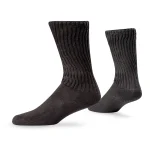
Just what are ‘diabetic socks’ and why those with diabetes should wear them
Diabetes is not merely a condition of elevated blood sugar; it is a systemic disease that silently attacks the body’s smallest blood vessels and nerves, with the feet often bearing the heaviest consequences. More than 1.5 million Australians have diabetes, and up to 34% of them will develop a foot ulcer in their lifetime. Fifteen percent of those ulcers lead to amputation. These are not rare tragedies—they are predictable, preventable outcomes of poor foot care. Among the simplest, most effective, and most consistently under-utilized interventions is the daily use of properly designed diabetic socks. Far from being a marketing gimmick, diabetic socks are a medical tool engineered to address the precise vulnerabilities created by diabetes. Those who dismiss them as “just socks” are gambling with limbs.
The central problem in diabetic feet is loss of protective sensation combined with impaired circulation. Peripheral neuropathy damages nerves so thoroughly that a person can walk on a protruding nail, a blister, or a foreign object inside the shoe and feel nothing until infection has already set in. Simultaneously, microvascular disease and arterial stiffening reduce blood flow to the extremities, slowing healing to a crawl. Even trivial injuries—a seam rubbing the toe, a tight elastic band at the ankle, moisture trapped against the skin—become gateways to disaster. Standard socks, with their tight cuffs, raised seams, and cotton that holds moisture like a sponge, are actively dangerous for diabetic feet. Diabetic socks are designed from the ground up to eliminate every one of those risks.
First, diabetic socks are non-binding or have very mild, non-constricting tops. Traditional socks leave a red ring around the calf because the elastic compresses superficial veins and lymphatics. In diabetic patients with already compromised circulation, that innocent-looking mark signals reduced venous return and increased risk of swelling, skin breakdown, and thrombosis. True diabetic socks use special knitting techniques or minimal elastic so that blood flow is never impeded. Multiple studies, including a 2017 trial published in Diabetes Care, have shown that non-binding socks significantly reduce lower-leg edema and improve ankle-brachial index scores in patients with diabetic peripheral artery disease.
Second, they are seamless or have inverted, hand-linked toe seams. Even a slightly raised seam inside a normal sock can create pressure points equivalent to standing on a small pebble for 12 hours a day. In a person cannot feel the damage until it is too late, that pressure point ulcerates. Seamless construction removes that risk entirely. In clinical practice, podiatrists routinely find that switching to seamless diabetic socks alone resolves recurrent toe ulcers that no amount of expensive wound care could heal.
Third, diabetic socks are made from moisture-wicking fibers (acrylic, polyester blends, bamboo, CoolMax, or merino wool blends) that actively pull moisture away from the skin. Cotton, by contrast, absorbs moisture and holds it against the foot, creating the perfect warm, wet environment for fungal and bacterial growth. Diabetic patients have a dramatically higher rate of tinea pedis and gram-negative infections; keeping the foot dry is not a comfort issue—it is infection prevention. Silver-ion or copper-infused yarns in many diabetic socks add an additional antimicrobial layer that has been shown to reduce bacterial colony counts by over 99% in laboratory testing.
Fourth, extra padding in the footbed, heel, and ball of the foot—without adding bulk inside the shoe—provides cushioning against shear forces and impact. Diabetic feet have thinned fat pads and high plantar pressures; extra targeted padding reduces peak pressures by 15–30%, according to force-plate studies. This is not luxury cushioning; it is mechanical offloading comparable to expensive custom orthotics in some cases.
Fifth, many diabetic socks are white or light-colored on the sole so that any drainage from an unnoticed wound is immediately visible when the sock is removed. This simple design choice has saved countless limbs by prompting early intervention.
The evidence supporting diabetic socks is remarkably consistent. The American Diabetes Association’s 2024 Standards of Care explicitly recommend “padded socks without seams” as part of comprehensive foot care. A 2019 systematic review in the Journal of Foot and Ankle Research examined 14 studies and concluded that diabetic socks reduce the incidence of foot ulcers by an average of 42% when used consistently. In a Veterans Administration in the USA study of over 200 high-risk diabetic patients, those provided with three pairs of padded, seamless, moisture-wicking socks and instructed to wear only those socks had a 68% lower rate of new foot ulcers over 18 months compared to controls.
Cost is rarely a valid objection. Good diabetic socks cost $20–$30 per pair and last far longer than cheap cotton socks. When weighed against a single emergency-room visit for cellulitis ($3,000+), a hospitalization for osteomyelitis ($20,000–$100,000), or a below-knee amputation ($70,000+ plus lifelong disability), the return on investment is absurdly favorable.
Yet compliance remains poor. Patients complain that diabetic socks “look medical,” feel different, or are hard to find in wide sizes. These are solvable problems.
The harsh reality is that diabetes does not forgive neglect. Every 20 seconds, somewhere in the world, a limb is lost to diabetic foot complications. The difference between keeping both feet and losing one is often measured in millimeters of pressure, degrees of moisture, and minutes of restricted blood flow—all factors that proper socks directly control.
Diabetic socks are not a fashion accessory or an optional comfort item. They are a non-negotiable component of limb salvage, as essential as metformin or insulin for many patients. Anyone with diabetes who is still wearing regular drugstore socks is engaging in preventable Russian roulette with their feet. The medical community has provided an inexpensive, evidence-based, zero-downside intervention. The only remaining question is whether patients will use it before statistics catch up with them.
-
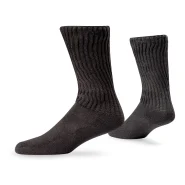
Diabetic Socks
$29.50 incl GST Select options This product has multiple variants. The options may be chosen on the product page -
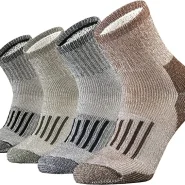
Socks for Cold Feet
$22.50 incl GST Select options This product has multiple variants. The options may be chosen on the product page
Related News:
 How do you know if you have a chilblain?
  Recommended Exercises Using the Pediroller
 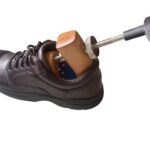 Haglund’s Deformity Shoe Stretch
  Fix Toe Pro for Metatarsalgia
  Rigid Carbon Fibre Inserts for Toe Walking
  Toe “thingy’s” – which toe spacer?
  Correct the toes: ‘Toe Corrector’ or ‘Toe Straightener’? Toe Yoga Exercises
